
Better safe than sorry
Dictionary meaning:
Safeguard [ˈseɪfɡɑːd] - protect from harm or damage with an appropriate measure.
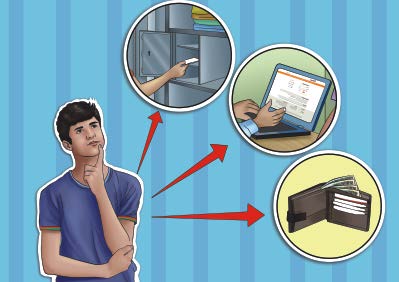
Here are some ways to keep your money and information safe:
- Money/valuables that you carry with you
- Do not carry more than what you need.
- Try to carry the money on your person instead of in your bag that is likely to be lying around unattended.
- If required, divide the money and store it at multiple places.
- Keep money in a manner that you can take out small amounts easily without having to show the entire bundle every time you have to take out a small note.
- Avoid wearing expensive jewellery and attracting attention to yourself by showing off your possessions.
- Particularly while travelling:
- Avoid carrying all your cards or money. Keep only what is necessary.
- Avoid going anywhere alone.
- Beware of cheats waiting to fool you by asking for money for medical/financial emergencies.
- Money/valuables you store at home
- Find innovative hiding places. But make sure you don’t forget where you have hidden your money.
- Check periodically to ensure your savings are safe.
- If possible, share with your parents so that they can help and keep track as well.
- Don’t show your savings or talk about them in front of outsiders or the help at home.
- Savings Accounts
- Locker
- Digital passwords
Keep your savings safe in the bank. This will not only keep your money safe, but also help you save more as you will not be able to dip into your savings every time you want to buy something on a whim.
You can request your parents to keep your prized possessions in a bank locker or you can even use the locker at home if your parents have one. However, if you use a locker at the school or club etc. be very careful about keeping it locked at all times. Also, ensure that no one else knows what all you are storing in it.
Digital passwords provide the same safety that a physical lock does. Almost all electronic devices have the option of setting one. This is a smart and easy way to keep your device and the information on it safe. Just make sure you don’t use your date of birth, phone number, address or other such obvious passwords. Don’t share this password with anyone and make sure you change the password often.
While our gadgets, social networking and online shopping has made our lives simpler and more fun, they have also put us at greater risk of being cheated off our money or personal information. We have to take extra care to ensure we stay safe.
Here are some tips from privacy and security experts on how to protect your money when banking and shopping online.
- Do an assessment of your online activities: Check what private and personal information are you storing, sharing and posting on a device/online.
- Install the latest antivirus software on your devices: Keep in mind that antivirus so¬ftware only protects your device, not your internet connection.
- Be careful what you share on social networking sites. Don’t befriend anyone you don’t know otherwise.
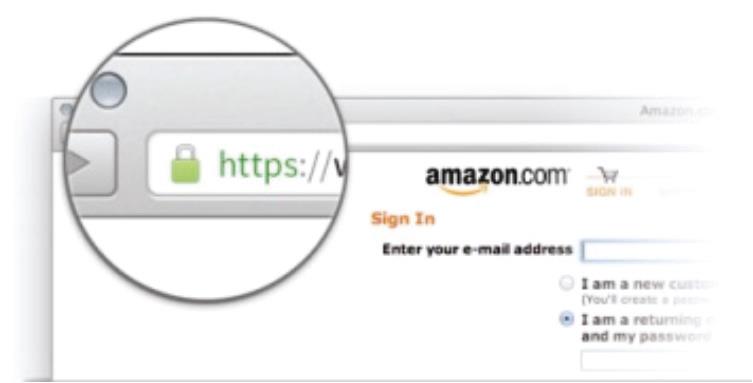
- Make sure shopping sites are secure: Look for “HTTPS” at the beginning of the website address and the padlock icon.
- Delete or clear the tracking cookies: Information about you can then be sold to companies around the world without your consent.
- Beware of phishing: Don’t share the credit card details or bank passwords with anyone.
- Do not open unknown links or websites offering free apps and downloads, but asking for access to your system.
- Keep a record of your transactions.
- Don’t just throw bills or transactions papers into trash.
- Lock your Smartphone and use strong passwords everywhere.
- Don’t carry out any financial transactions on a public computer.
Caution: Don’t show off your belongings. This may tempt or attract unwanted elements. Stay humble, stay safe. Also remember, anything you post online once, stays there forever. You cannot delete it.

Caution is the parent of safety. ~Proverb
Better to be safe than sorry. ~American proverb
He who fails to plan, plans to fail. ~Proverb
The idiom, ‘A stitch in time saves nine’ suggests that if we do the right thing at the right time, we can avoid a lot of trouble in the times to come, while ‘throw caution to the wind’ is used to suggest a state where you start taking risks and stop worrying about the danger involved.

- Physical money
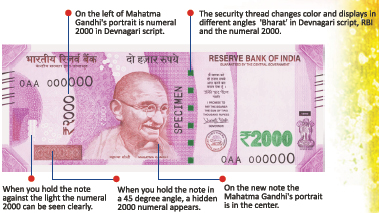
How do you identify a fake ₹ 2,000 note?
The ₹ 2000 currency note has 17 identification marks. Five of them are:
- When you hold the note against the light the numeral 2000 can be seen clearly.
- When you hold the note at a 45 degree angle, a hidden 2000 numeral appears.
- On the left of Mahatma Gandhi’s portrait is the numeral 2000 in Devnagari script.
- On the new note the Mahatma Gandhi’s portrait is in the center.
- The security thread changes colour and displays ‘Bharat’ in Devnagari script, ‘RBI’ and the numeral ‘2000’ at different angles.
- Online identity and safety
- Identity theft is a crime in which someone wrongfully obtains and uses another person's personal data to commit a fraud, usually for monetary gain.
- Tracking cookies are small pieces of code that websites attach to your computer to store information about your online activities. This information can be used by others to harm you.
- Phishing is the fraudulent practice of sending emails pretending to be from reputable companies in order to cheat you into revealing your personal information, such as passwords and credit card numbers, online.
- Cyber stalking is when a person is followed and pursued online. Their privacy is invaded, their every move watched.
- In ninety per cent of cybercrime cases, the offenders are known to the victims and their family.

It’s always better to be safe than sorry. Take extra steps to protect yourself—both your money and your information.
Never carry extra cash on you.
Never show off or brag about what you have.
Do not share sensitive money-related or personal information with anyone online. Be vigilant at all times and do all you can do to reduce your risks of identity theft, fraud, and spam.
Anything you post online once, stays there forever. You cannot remove it.
Tab9
Tab10
- Request your parents to take you to a bank.
- At the bank, find out about different options for depositing your savings in a Savings Bank Account, Fixed Deposit, Recurring Deposit, etc.
- Operate an ATM machine.
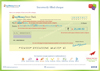
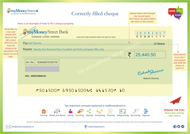
- Find out how to fill up a cheque. You may use the sample cheque given here. We have also shared a blank cheque for you to practise with.
- Request a grown up to help you learn how to spot a fake currency note.
- Learn about the different identification marks on different currency notes.

For each website that you visit, observe what the URL starts with. Which one of the following do you see?

